
Basketball positions and roles define how a team walks through possessions, handles the ball at the sideline, and defends the rim. Even in modern basketball, the big five positions shape spacing, decision‑making, and matchups — from NBA legends to the beginning levels. Coaches use size, pace and skill so that the best player gets the ball, protects space, plays close to the basket and finishes with elite skills.
In this guide we look through the different basketball positions: the habits that make a player fit each role, and the players who bring offense and defense together. Understanding position descriptions (as an athlete) means knowing how the five spots connect from a basketball perspective and how to make Spinbetter football betting work best for you.
Traditional labels persist because they tell you where responsibilities begin. A coach builds balance with five players, not five identical athletes. One player demands to score, a guard manages the action plan, the wing covers space, and bigs hold down interior space. Here is the simplest version of the model:
Classic Position Framework: Basketball Positions Explained
| Position | Core task | Normal operating zone | Main pressure point |
| Point guard | Initiate offense | Top, slots, outer lanes | Decision-making |
| Shooting guard | Shot creation and finishing | Wing, corners, arc | Scoring efficiency |
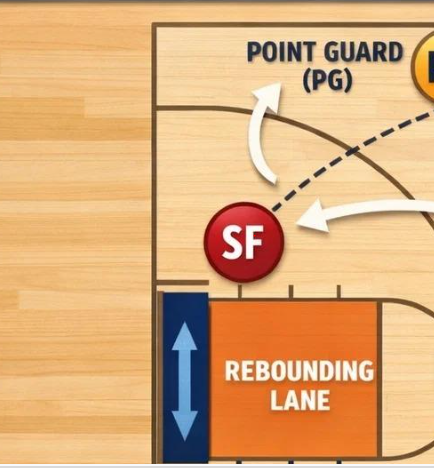
| Small forward | Two-way wing work | Wing, elbows, transition lanes | Versatility |
| Power forward | Interior strength with mobility | Mid-post, dunker spot, short corner | Physical balance |
| Center | Paint control | Near the basket, restricted area | Rim protection |
That table looks simple, but the reality is more fluid. Because basketball teams use pace, switching, and skill, the different positions overlap more. Still, with the right structure, basketball positions on the court are the easiest to learn. It’s a good trick to understand the sport: Who will run the offensive floor? How can we bend the defense without the ball? Who controls the paint — offensively and defensively? Answer those and the logic of a lineup becomes evident.
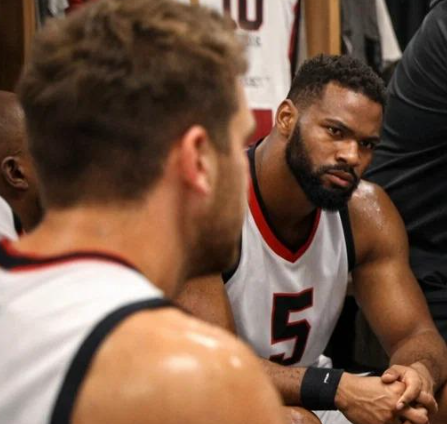
Point Guard — The Organiser Of The Game
The point guard is most often in charge of the game, not just about fast passes or speed. It gets down to timing, control, and pace. As a result, this player on the team must dribble under pressure, direct teammates, call actions, and decide when to initiate quickly or wait. Strong guards can be great at being one step early — they understand things very fast. A lead guard is what a team needs to drive the ball from one point to another, keep the defense out of position, and take advantage when help arrives.
At the same time, the best ones have fast basketball IQ that matters as much as quickness. They read weak‑side tags, detect traps, and see if a simple pass is better than an unnecessary shot. A floor general usually has:
- steady handling skills in the face of pressure
- vision and understanding of offense versus defense
- a deceptive threat to pull up when necessary
- the voice to organize players on the court
This role has changed. Teams today use combo guards or shared creation, not a single playmaker. The line between point guard and shooting guard blurs in many systems. Yet someone needs to put the team in place, to call sets and help teammates succeed. That is the heart of the job.
Shooting Guard — Pressure On The Defense
The shooting guard has always been about buckets — but the best versions of the role do far more than just shots. The position is about scoring instinct, off‑ball feel, and punishing defensive mistakes instantly. It is often the team’s best perimeter scorer (sometimes not) and its best pure shot‑maker. Notable guards adapted historically because they could attack in several layers: catch, rise, drive, pull up, finish. Michael Jordan stands as one of the foremost athletes due to footwork, explosion, mid‑range movement and elite competitiveness.
Now the position is wider and wide‑ranging. A two‑guard can be a movement shooter, slasher, or big offensive guard who starts second‑side action. A strong two usually needs to:
- be a threat via shot (catch & shoot, pull‑up)
- get layups done and create separation for jump shots
- defend guards at both ends
- work without the ball — footwork and anticipation required
- cut behind the defender, get a catch, and drift into open windows around the three-point line.
Small Forward — The Connector On The Wing
The small forward is often the bridge between guards and bigs. This is the most capable player who fills gaps and coverage in multiple positions and keeps the team going when the game gets chaotic. The best wings are truly the most versatile in the starting five — they defend up and down, rebound, and score from the outside shooting.
Small Forward Duties & Why They Matter
| Small forward duty | Why it matters |
| Guarding several matchups | Helps with switching and lineup flexibility |
| Attacks open lanes | Punishes slow closeouts |
| Helping on the glass | Boosts rebounding effort |
| Promoting spacing in the lanes | Keeps driving lanes open |
| Making smart cuts | Creates pressure inside the three‑point line |
Coaches want versatile players who can play more than one style. A wing can be assigned to defend a backcourt scorer one night but then spend long stretches fighting a big forward the next. The role serves more about feel, balance and agility than rigid specialization.
A classic four catches in the post zone and runs to the basket from the short interior window. But today’s systems need the defense to stretch out, and the stretch four is central to that. A forward who can screen, pop and make three‑point shots gives instant coverage. Typical job description includes:
- Contesting larger bodies from the front
- Protecting space in the paint
- Setting firm screens
- Finishing close to the basket
- Adding value on the boards by grabbing rebounds
A good 4 needs touch, too. Actions around the elbow or short corner in the half basketball court can open up a quick drive, kick‑out or a soft finish. When a player can hit from multiple angles, the forward position cannot be so easily plotted out.
Center, Sixth Man & How Roles Overlap Today
The center is the tallest and strongest player in the team. They occupy defenders by closing the middle deep, screening hard and rolling to the cup. They also correct mistakes: when perimeter defenders fail, the big is the solution behind the play.
The main job of a center is about taking care of the basket: protect it with timing and height, win position in the low post area, hold onto rebounds on both ends, and finish easy looks at the rim.
Modern basketball values flexibility. The idea that players can play multiple key roles is more prevalent, which is why lineups merge guard, wing and big duties. The center can pass from the elbow. The four can handle transition. The wing can defend as a small‑ball five. That is why basketball positions today need structure but also overlap.
The Sixth Man Role
The sixth man does not start but often closes games. A strong sixth man improves tempo, creates shot creation and fills weak spots when starters rest. Sometimes it’s instant offense; at other times a reserve capable of moving from forward to center, switching roles from one night to the next.
How Coaches Assign Roles & Build Lineups
A lineup exists as a unit, not five names alone. Coaches look for fit before labels.
Balance Framework: Needs & Roles
| Need | Role to provide it | Why it’s important |
| Early initiation | Lead guard | Starts action cleanly, reads coverage |
| Shot pressure | Wing scorer | Forces rotations, bends defense |
| Paint control | Big (center/power forward) | Protects rim, finishes & rebounds |
| Primary creation | Wing / guard | Prevents stagnant offense in late clock |
| Defensive flexibility | Multi‑role forward | Covers matchup problems, switching |
The best lineups share a few things: enough shooting to create lanes, enough size and strength to stick with opponents on the glass, a player who can create late‑clock offense, and a group that trusts to rotate together.
Why Roles Matter In Positionless Basketball
People say basketball is “positionless” now — but that’s only half true. The game is more fluid than it used to be, yet roles still define every game’s foundation. Someone has to organise the first action. Someone must bend the defense with scoring gravity. Someone must own the paint. Someone must cover mistakes. Labels evolve, but the structural logic stays.
FAQ — Common Questions About Positions in Basketball
What 5 Basketball Positions do you know?
Here are the positions: point guard, shooting guard, small forward, power forward, and center.
Which Positions Takes Care Of The Ball Best?
Traditionally the point guard handles that responsibility, especially early in the game. Reading coverage and making the first good decisions is part of the job.
Is The Tallest Player Always The Center?
Not necessarily. In many teams with mobile or smaller lineups, the tallest player might still play center because the position requires paint protection and rebounding, but some lineups use a “small‑ball” center who brings speed and floor spacing.